Jewelry articles - Sterling silver,Fashion jewelry,Fine jewelry in China

Welcome Guest

Search:

What is pearl jewelry? Is it so expensive?

View PDF | Print View
by: Orita
Total views: 2967
Word Count: 522

Ever since the ancient Egyptians first started creating jewelry, pearls have become one of the highest regarded gemstones. Even today pearls still hold their value due to the rarity of "mother nature" creating this form of jewelry.

The prices of pearls though, have confused many novice buyers. Few seem to understand how one strand of pearls can cost them $300, while another similar looking piece can cost $40. Just like diamonds, there are many factors that contribute to the price of a pearl.

There are two main types of pearls, those that occur naturally and those that are cultured. Naturally occurring pearls hold a significant value due to the rarity of pearls being produced. Of the 8,000 or so species of oysters, only about 20 of those are able to constantly produce pearls. For the most part the pearls these oysters do produce, few maintain a round or spherical shape.

Somewhere in the 19th centaury science found a way to produce synthetically. These are called cultured pearls. Most of today's pearl jewelry is made in this way. The process involves surgically implanting the agent that causes the process of creating the pearl and creating a farm like environment for their stable of oysters. Although each variety of oysters creates a different style of pearl, cultured pearls are easily able to create the spherical shape most consumers¡�desire.

It is extremely difficult for the most experienced jeweler to determine the difference between natural and cultured pearls. The only real way to tell the difference is through submitting the pearl to an x-ray. A natural pearl will show the internal formations and stages of its growth, while a cultured pearl will have a solid center with no evidence of growth. As far as value for your dollar is concerned, a cultured pearl goes a far way since nobody will be able to tell the difference.

The size of the pearl will also have a bearing on price. In general the size is measured using the diameter of the pearl and expressed in millimeters. Even a millimeter difference can create a 100 percent or more difference in value.

Size also goes hand in hand with the shape of the pearl. The ideal shape is supposed to be perfectly round. However, using irregular shapes can reduce the price of the pearl and in some cases improve the uniqueness of the jewelry. Most of the common shapes are oval, tear dropped or look button like.

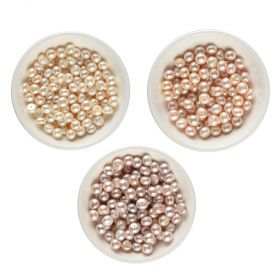
Other factors in the price of a pearl are color, luster and its surface. Ideally the perfect pearl would be silvery white, very reflective and contain no surface blemishes. Although color is a personal preference and pearls come in a variety of colors both naturally and syntactically.

In the end though, what really matters is how the individual feels about the particular piece of jewelry. If the pearls are to be enjoyed instead of an investment piece, than none of the grading rules jewelers use really matter. What does matter though is that the color and size of the pearls perfectly complement the owner¡¯s beauty and grace.

Recommended pearl jewelry - Freshwater pearl necklace - Oysters with pearls - Pearl jewelry sets

About the Author


Orita Liang


Rating: 4.67

Comments

No comments posted.

Add Comment

You do not have permission to comment. If you log in, you may be able to comment.
 

Online jewelry store   |  Wholesale jewelry   |  Pearl jewelry   |  Featured jewelry  |  New jewlery products  |  Jewelry Blog  |  Jewelry resources |  Sitemap |  CN | 

Copyright © 2005-2008 Topearl.com. All rights reserved